Notes from the workbench. Worlds still taking shape.
Not every journey begins on the page.
Long before a memory finds its place in Wilma’s journal, there are fragments.
An idea. A sketch. A pile of printed parts on a workbench. Colours tried, discarded, and tried again. Tiny figures waiting for their place in a world that does not quite exist yet.
And the workbench does not always follow the journal.
Some ideas arrive long before their place in the story has been reached. Others appear at exactly the wrong moment and simply refuse to wait. A scene may belong to a journey Wilma has not yet remembered here — while another has been sitting unfinished on my desk for months, quietly demanding an answer to a problem I have been avoiding.
Between the Pages is a look at those unfinished worlds.
Here, I share scenes as they take shape on my workbench — from the first vague idea to the decisions, mistakes, changes of direction and occasional happy accidents that slowly turn a collection of parts into a place Wilma and Vladimir might one day remember.
Some of these stories already have an ending.
Others are still being built.
And some may change completely before they ever find their way into the journal.
This is not the journal.
This is what happens between the pages.
Some Ideas Refuse to Wait – 15.7.2026
The workbench does not always follow the journal.
Some ideas arrive long before their place in the story has been reached. And some of them simply refuse to wait.
A Storm is Rising was one of those.
It belongs to a much later chapter in Wilma and Vladimir’s journeys — on a barren, rocky world the journal has not reached yet.
So, for now, we will leave the where and when unanswered.
This is not the story of that journey.
This is the story of how I built it.
The idea began as an image more than a fully developed scene: a small group of explorers, somewhere high above a barren landscape, while an enormous and rather unpleasant sky was beginning to change above them.
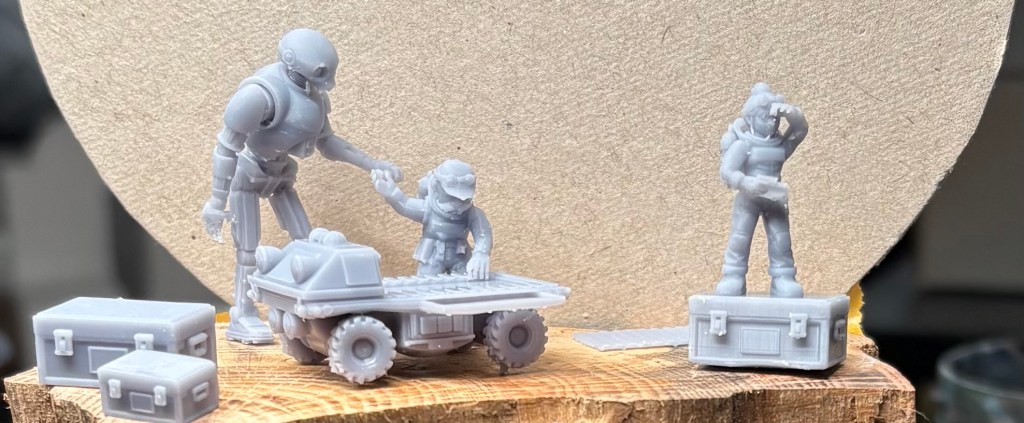
I knew very early that the figures should feel small.
Not unimportant. Wilma still had to lead the scene, and Vladimir and GB-2 had their own places in it.
But small.
The world had to be larger than them.
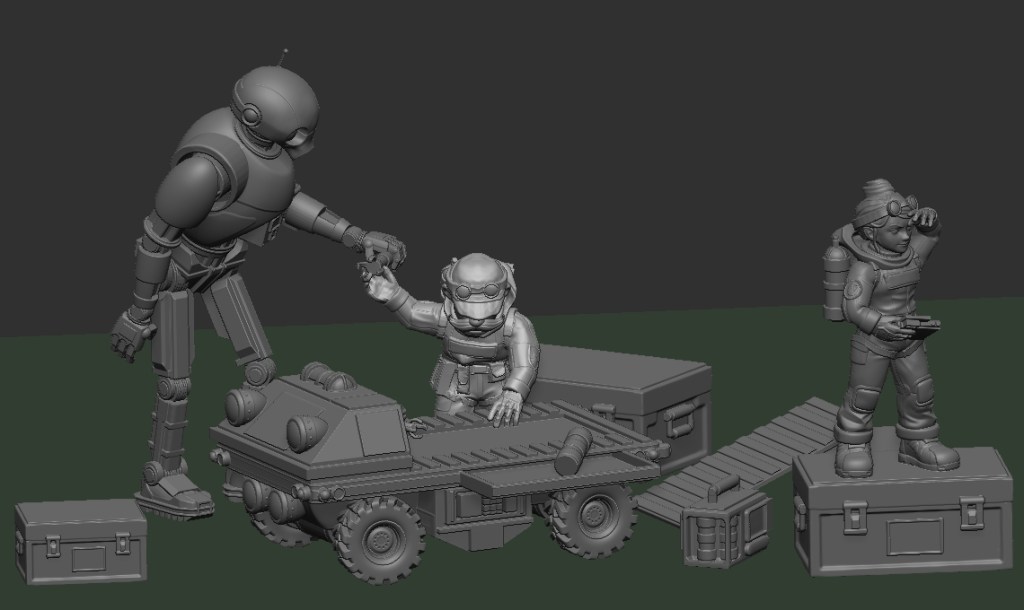
A first digital composition helped me find the basic arrangement. Wilma and Vladimir. GB-2. The MULE. Equipment scattered around a temporary position.
And behind all of it, a large circular sky.
At this point, everything still looked wonderfully simple.
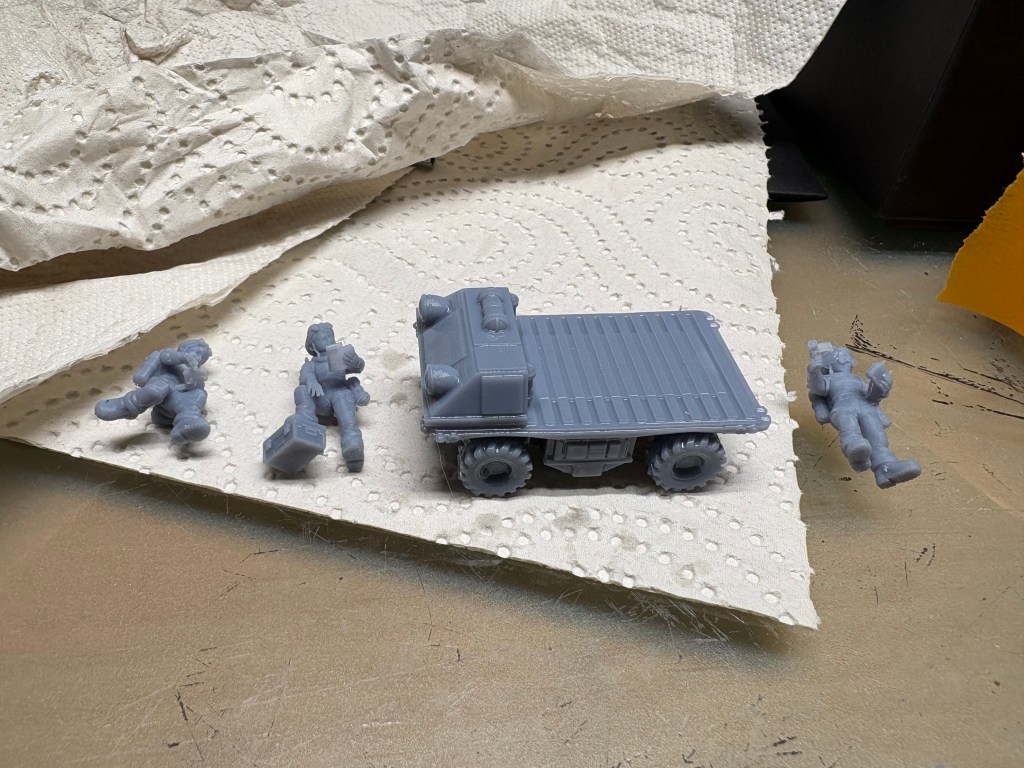
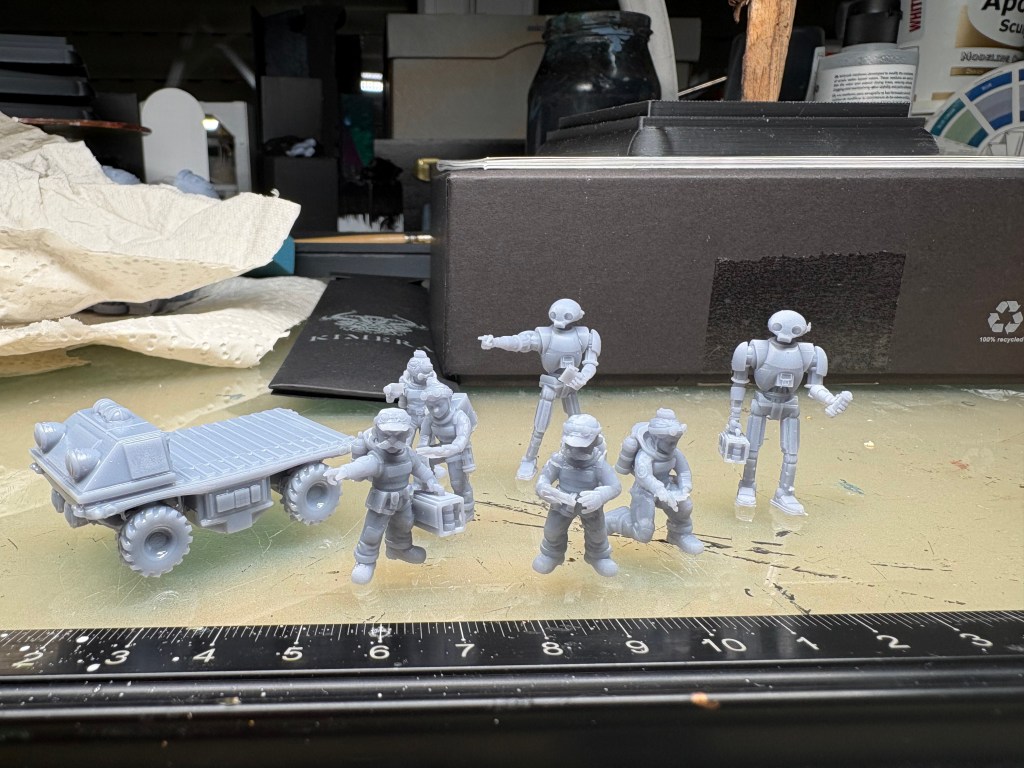
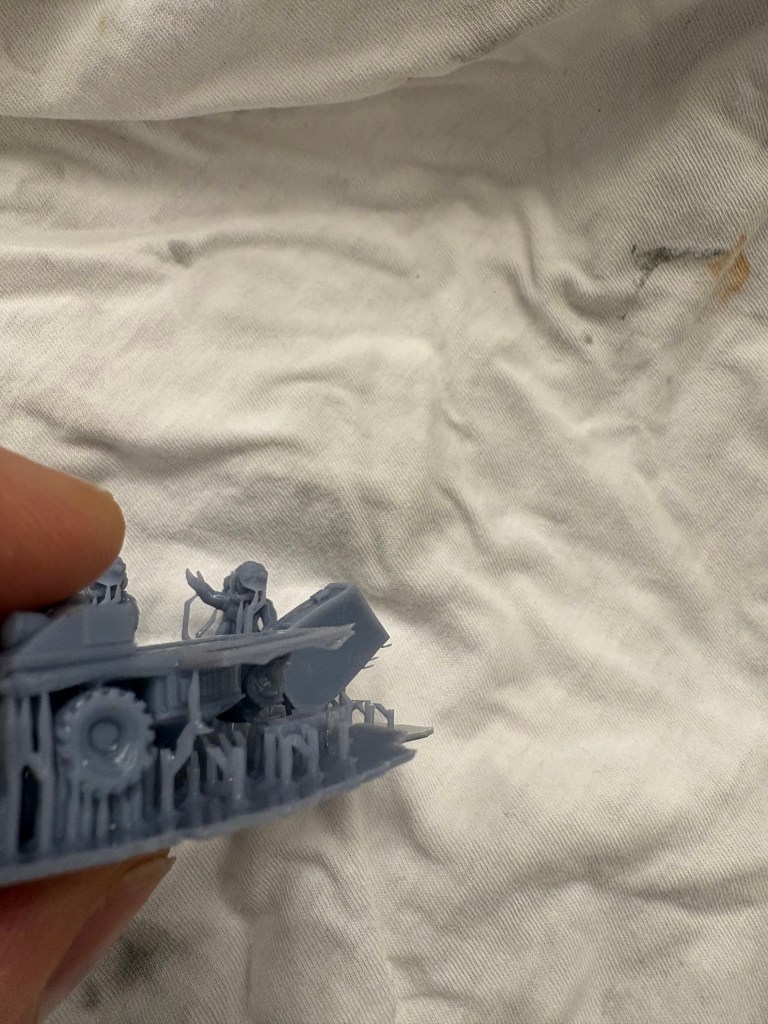
Then the printed parts arrived on my workbench.
Grey resin has a remarkable talent for making even the most dramatic idea look like a collection of spare parts from a very small garage.
Still, the basic composition was there.
Now I only had to build the edge of a world.
Building the Edge of the World
Building the Edge of the World
Every scene has a moment where it stops looking like a collection of materials and starts suggesting a place.
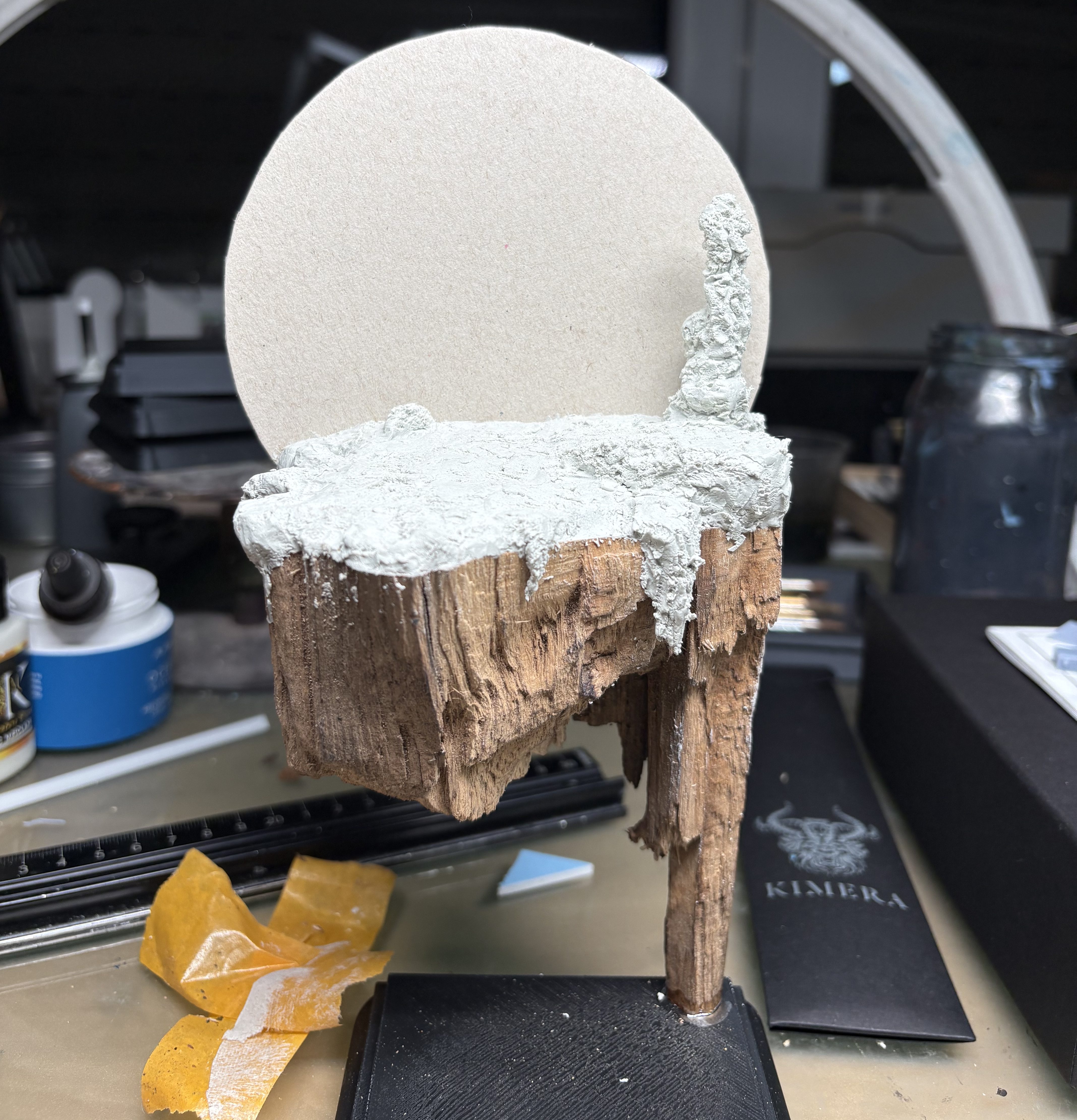
This was not quite that moment.
But it was getting close.
Unlike many of my other dioramas, this scene was never meant to spread out across a wide base. Instead, I wanted the landscape to grow upwards, almost like a slice cut from a much larger world.
The challenge was making that vertical composition feel believable.
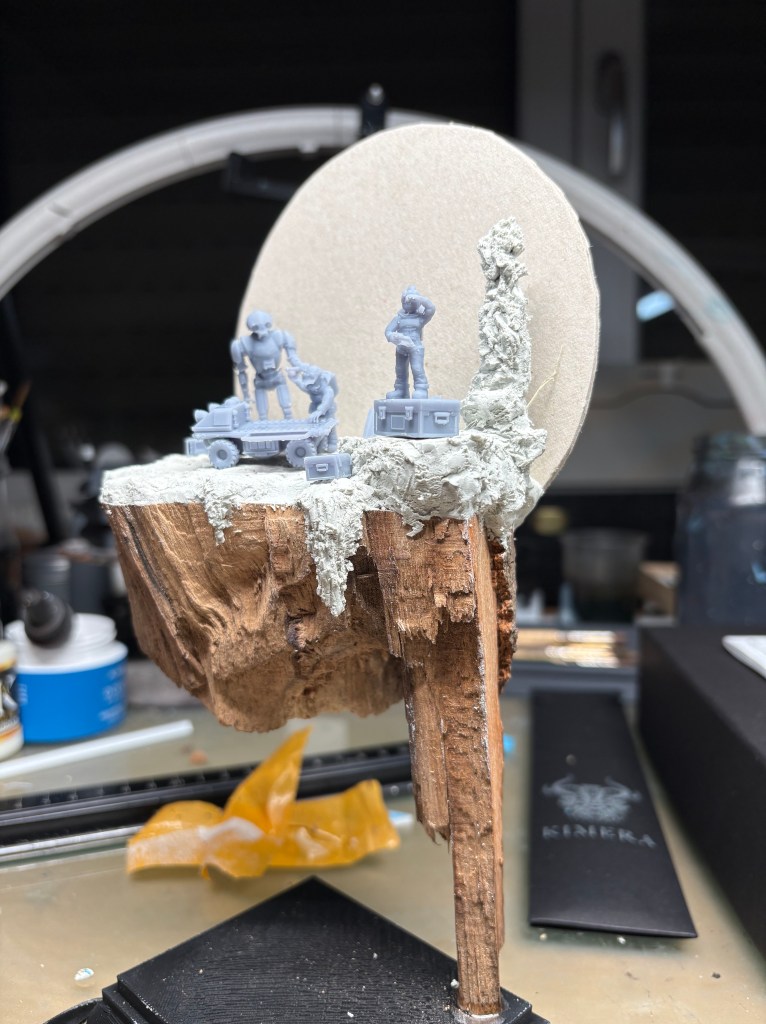
The rock formation had to carry the eye upwards without becoming a tower, while the narrow path needed to suggest there was far more landscape beyond the edges of the base than the viewer could actually see.
Most of the work at this stage was surprisingly unglamorous.
Foam.
Putty.
Texture paste.
A little more sanding than I had hoped.
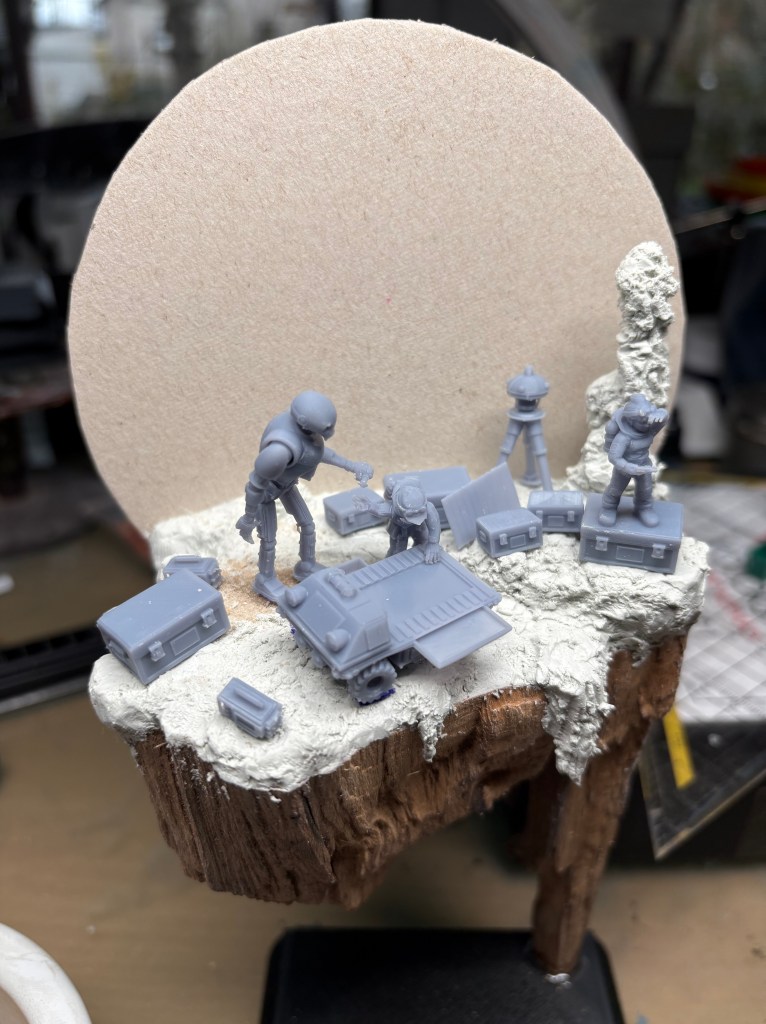
Then repeating the process because the first attempt still did not feel right.
The individual elements slowly began to merge into one continuous landscape.
Small adjustments made a remarkable difference.
A slope became slightly steeper.
An edge became softer.
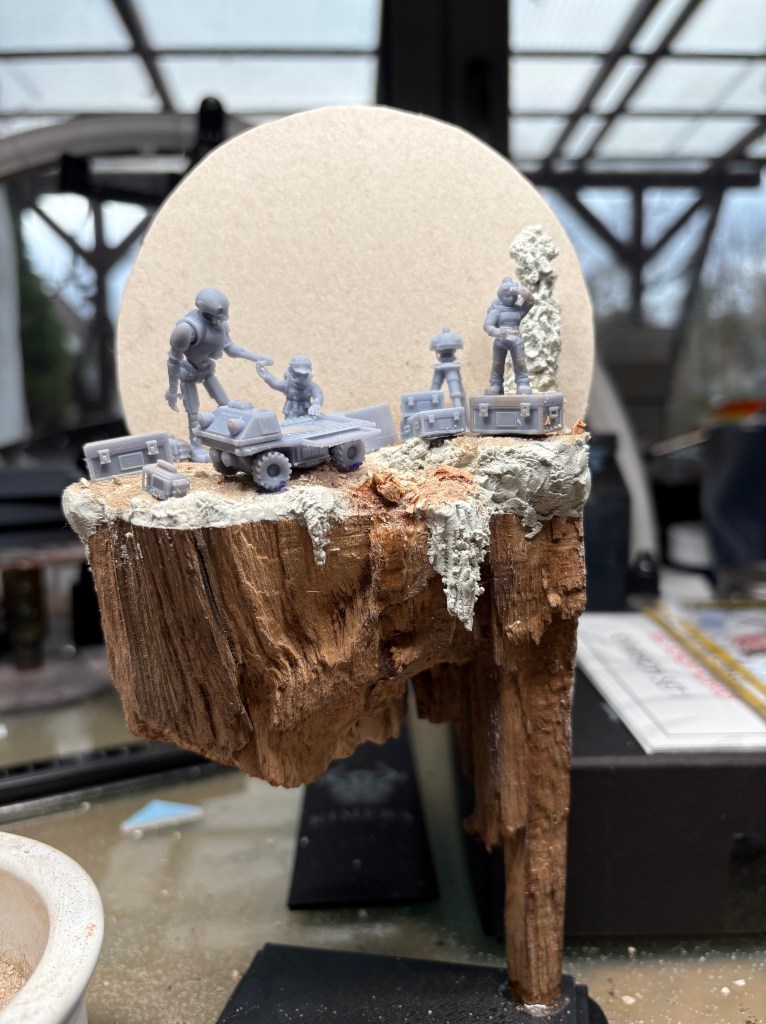
A transition disappeared almost entirely under another layer of texture.
Nothing dramatic happened.
But everything became a little more convincing.
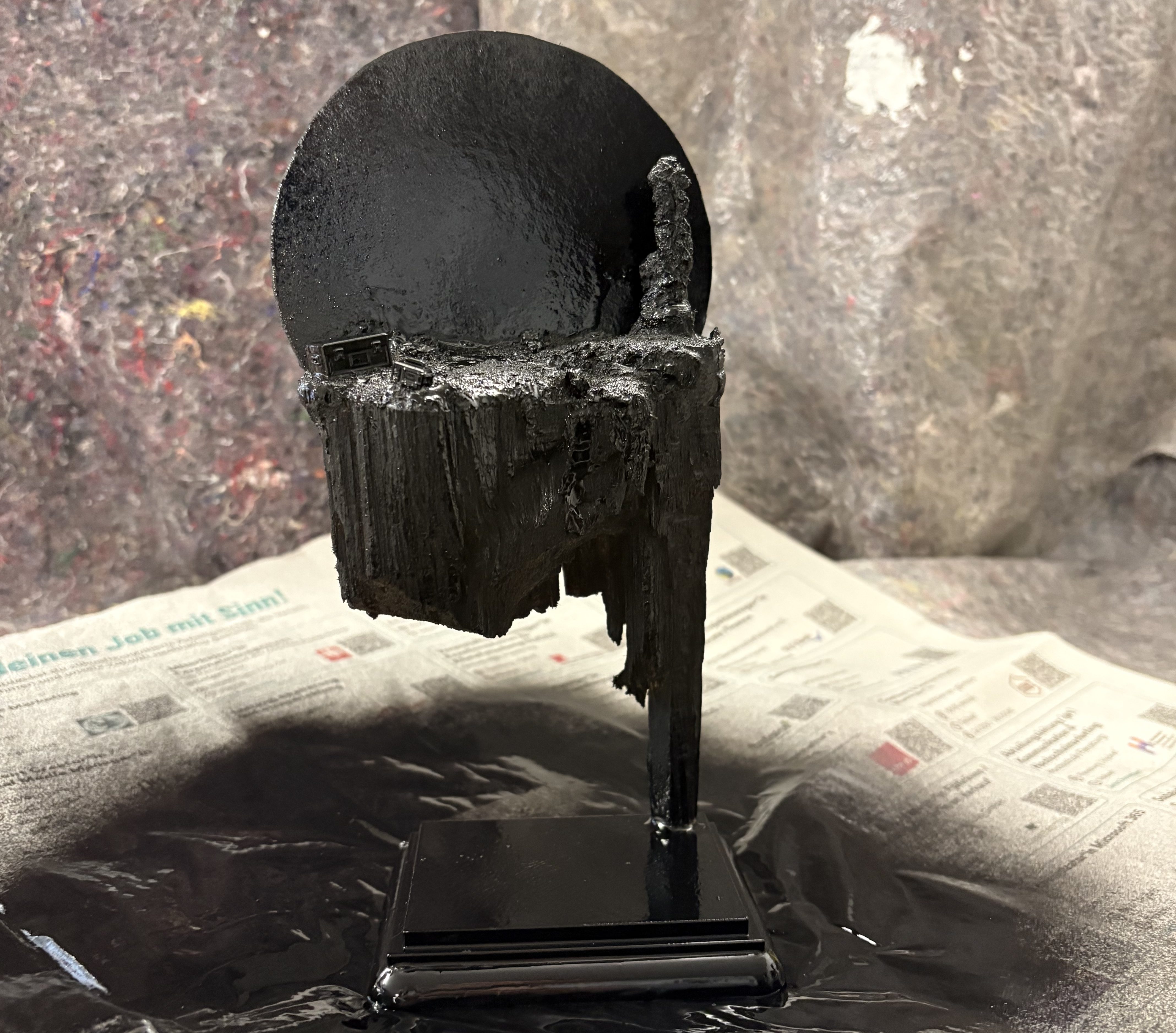
Finally, the entire piece received its first coat of black primer.
It is one of my favourite moments in any project.
The different materials suddenly stop competing for attention.
Wood, foam, putty and resin all become the same surface.
For the first time, you no longer see what the landscape is made from.
You only see the landscape.
There was still a long way to go.
But the edge of this world had finally begun to exist.
The Sky Is Not a Background (29.7.)
There is a temptation, especially with smaller dioramas, to think of the backdrop as exactly that.
A background.
Something that quietly fills the empty space behind the scene without asking too many questions.
Carsendo taught me otherwise.
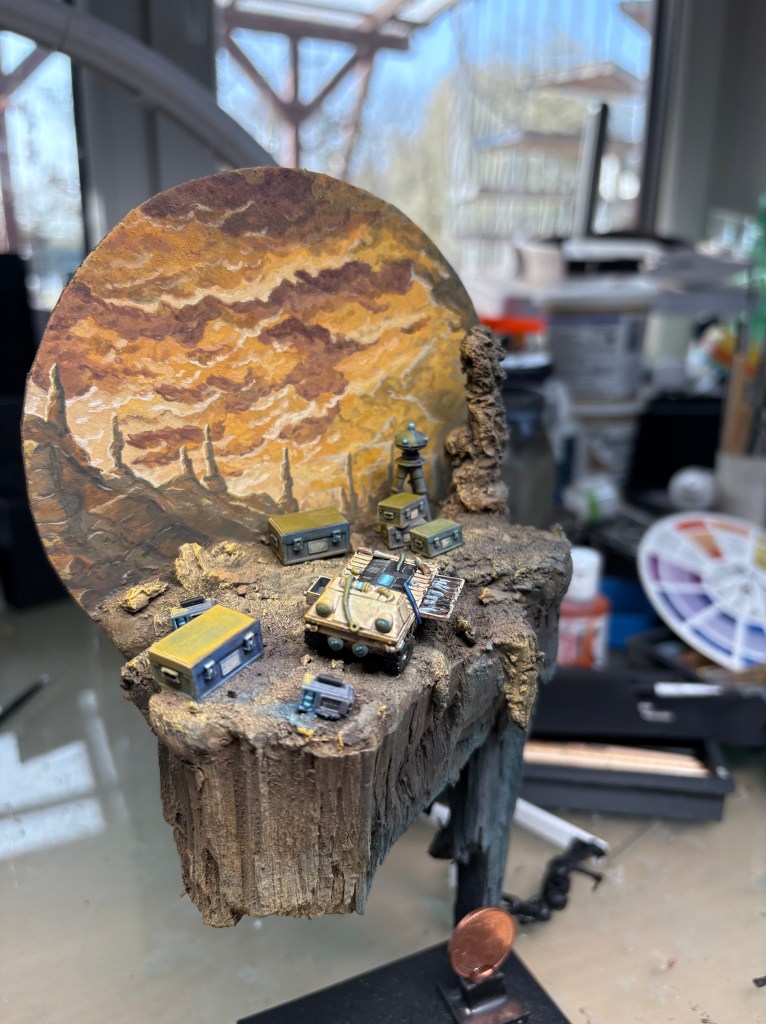
The sky is part of the landscape.
It defines the atmosphere long before the viewer notices the individual details on the ground.
For this project, I wanted the world beyond the base to feel vast rather than enclosed. The backdrop needed to suggest distant rock formations disappearing into haze, while still leaving enough open space for the eye to breathe.
Finding that balance took several attempts.
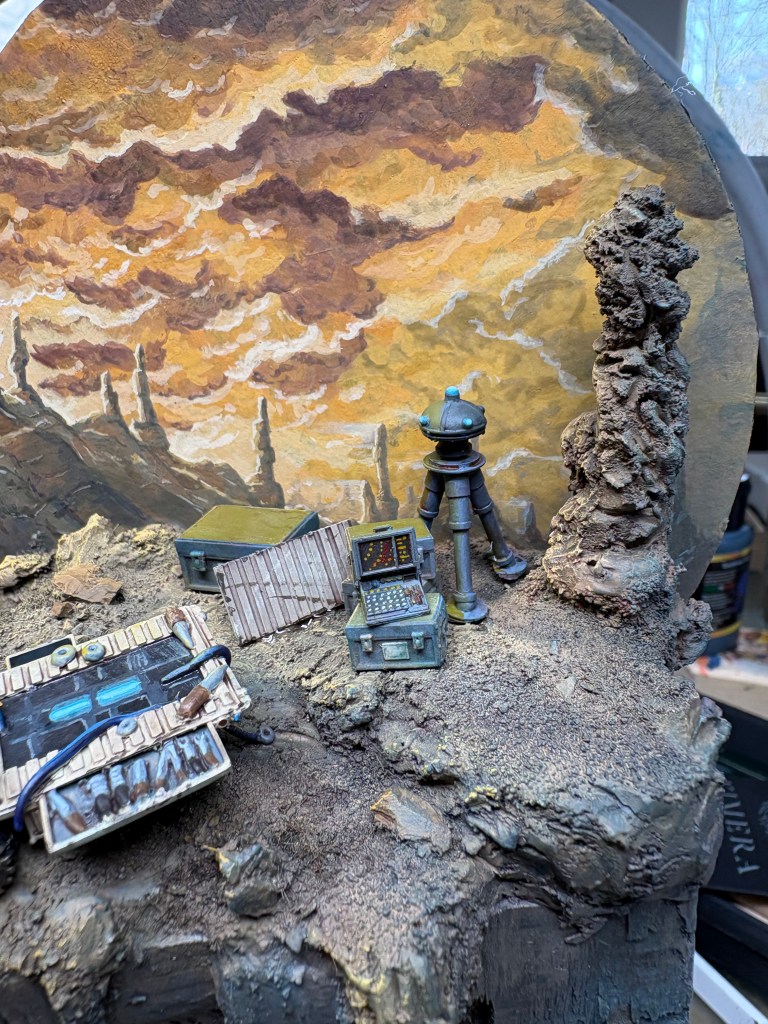
Too much detail, and the painted background began competing with the miniature.
Too little, and the scene lost its sense of place.
The answer turned out to be restraint.
Soft transitions.
Muted silhouettes.
Colours that supported the terrain instead of repeating it.
The backdrop should never become the main attraction.
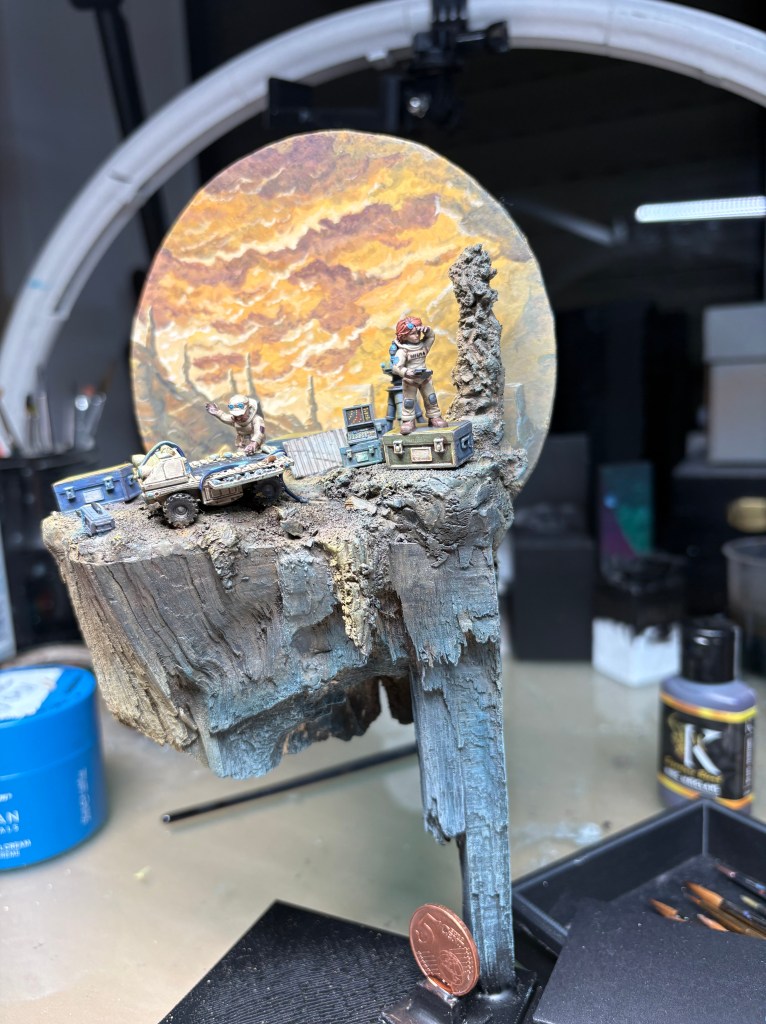
Its job is to convince the viewer that the story continues long beyond the edges of the display.
Only then does the foreground begin to feel real.
Looking at the assembled scene, I realised something had changed.
The figures no longer appeared to stand in front of a painted panel.
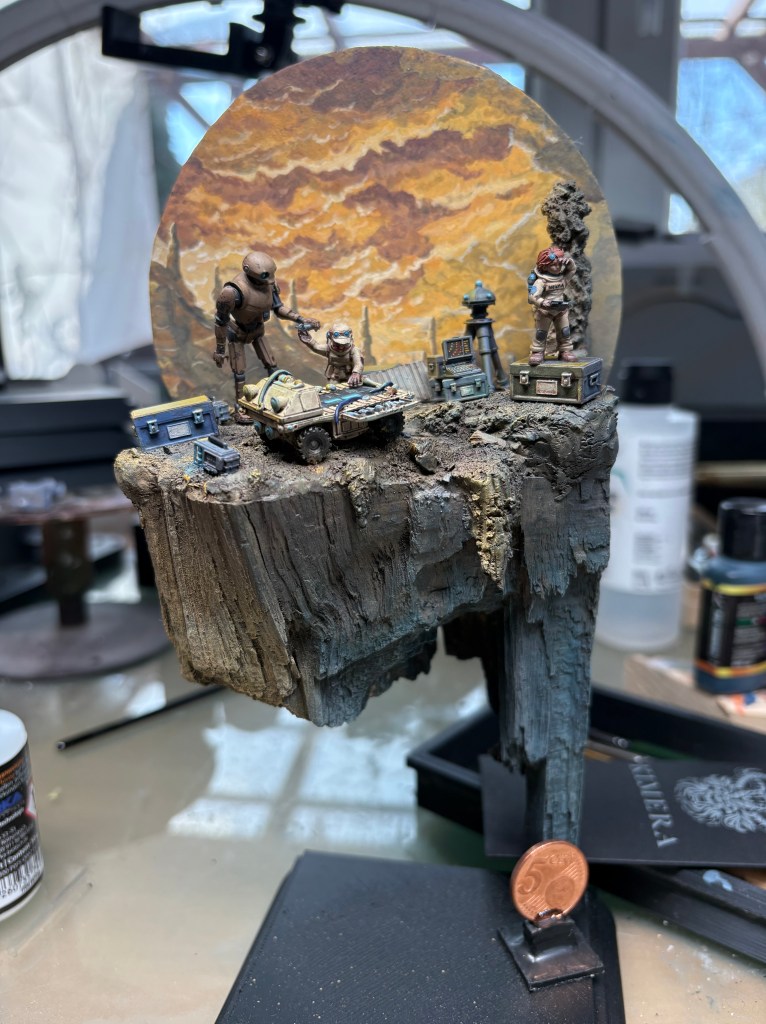
They stood inside a landscape.
That was exactly what I had hoped for.
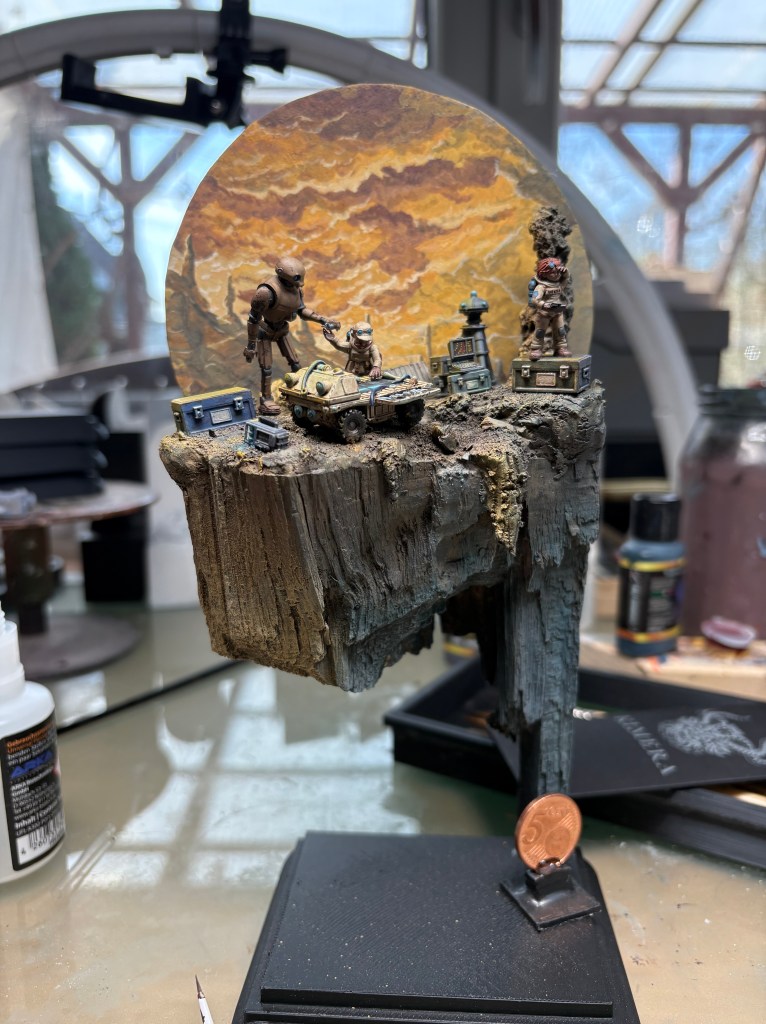
Sometimes the most important part of a diorama is the one you are not supposed to notice.
 journeysofmemory.com